Curiosities
When Does Winter Start in Australia? 1 June, the Shortest Day and the Snow Season
Australia counts winter from 1 June to the end of August. Why the season starts three weeks before the solstice, how much daylight Hobart and Darwin get, and when the ski lifts open.
When does winter start in Australia?
Winter in Australia starts on Tuesday, June 1, 2027 and runs to 31 August. It is not a public holiday: schools, shops and offices keep their usual hours on the first day of the season.
Like the other seasons, winter is a block of three whole calendar months: June, July and August. It is the meteorological definition, built around the annual temperature cycle, and those three months are the coldest of the year across most of the country. Spring follows on Wednesday, September 1, 2027.
Why 1 June and not the solstice?
Some countries begin winter at the solstice, the astronomical definition. Australia groups calendar months instead, so the coldest three months sit together in one season and climate records can be compared month by month, year after year.
The solstice arrives about three weeks later. Geoscience Australia describes it as the day with the least daylight hours of the year. It usually falls on 22 June, though it can land anywhere from 21 to 23 June.
In 2027 the exact moment is 12:11 am AEST on Tuesday 22 June, according to the US Naval Observatory. In Darwin and Adelaide, on half-hour time zones, that is 11:41 pm on Monday 21 June, and in Perth it is 10:11 pm on the Monday.
The shortest day is not the darkest morning
One detail surprises many people. Geoscience Australia notes that on the solstice the sunrise is not the latest of the year and the sunset is not the earliest. Sunrise keeps getting later for a while after 22 June, even though the total daylight has started to grow again.
So if the dark mornings feel worse in early July than on the solstice itself, the clock is not lying to you.
Daylight on the 2027 solstice: Hobart and Darwin
| City | Sunrise | Sunset | Daylight |
|---|---|---|---|
| Hobart (AEST) | 7:42 am | 4:43 pm | about 9 h 1 min |
| Darwin (ACST) | 7:07 am | 6:30 pm | about 11 h 23 min |
Times for 22 June 2027. Day length is the gap between sunrise and sunset.
Sources: US Naval Observatory, Astronomical Applications Department
Nine hours in Hobart, more than eleven in Darwin
Latitude makes winter feel very different across the country. On the 2027 solstice, Hobart gets about 9 hours of daylight, with the Sun down before 4:45 pm. Darwin, close to the tropics, gets about 11 hours 23 minutes, almost two and a half hours more.
In the Top End the cold is relative. In Kakadu National Park the Traditional Owners recognise six seasons. Yekke, from May to mid-June, is cooler but still humid. Wurrkeng, from mid-June to mid-August, is the cold weather season: low humidity, days around 30°C and nights down to about 17°C. Kurrung, hot and dry, starts in mid-August. These are the seasons of one place and one group of language owners, not a calendar for the whole north.
Snow season: the King's Birthday long weekend
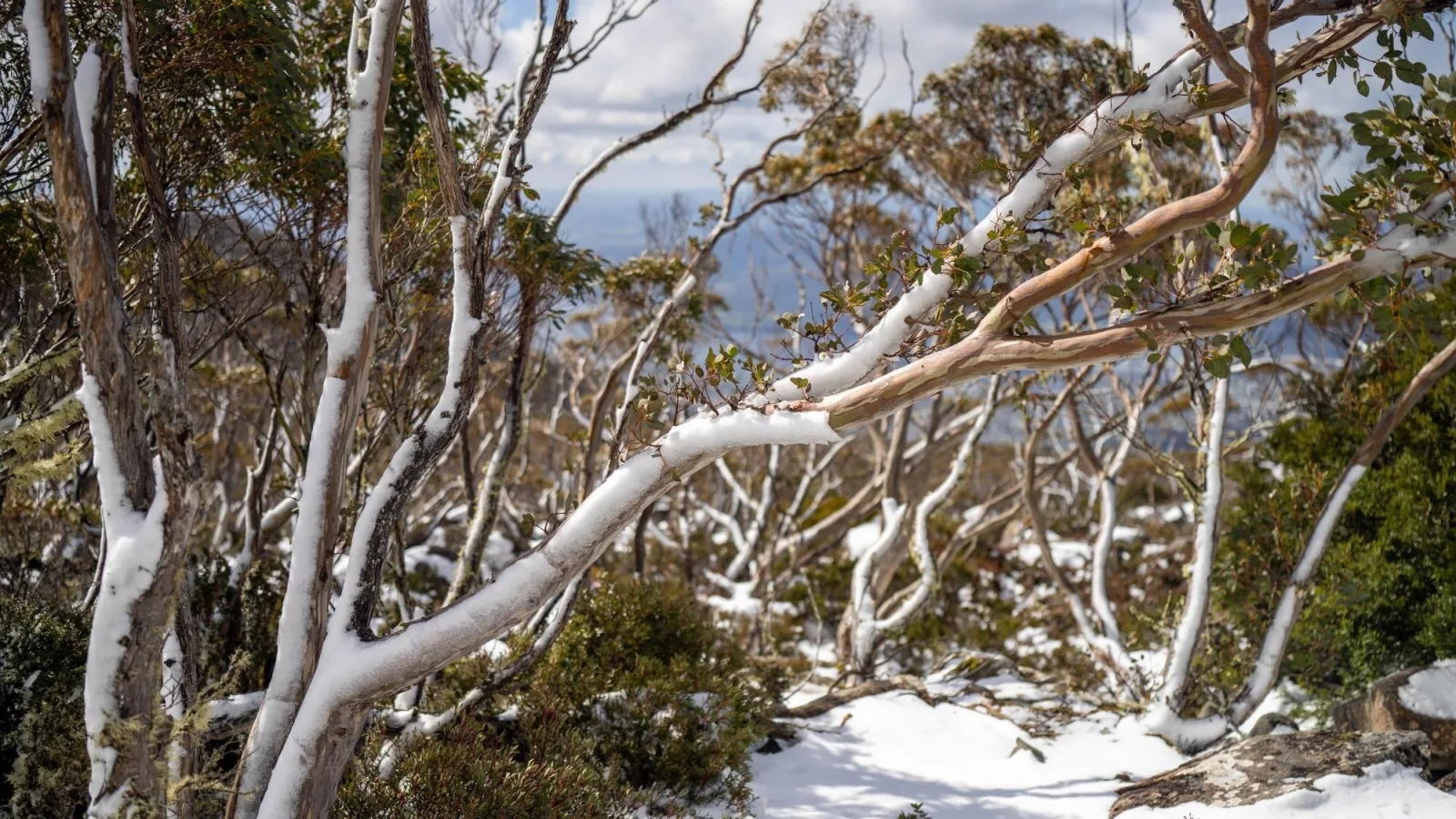
For skiers, winter really starts on the King's Birthday long weekend. The season traditionally opens on the first full weekend of June, which lines up with the holiday Monday in most states, including New South Wales and Victoria. In 2026 the opening weekend began on Saturday 6 June, after an early storm brought the first falls from around 31 May.
Visit NSW calls the June long weekend the official opening of the NSW ski season, with Thredbo, Perisher and Charlotte Pass in the Snowy Mountains. In Victoria, the alpine resorts of Mount Buller, Falls Creek, Mount Hotham, Lake Mountain, Mount Baw Baw and Mount Stirling open the season the same weekend. The Victorian Government puts their contribution to the state economy at more than $1 billion, with nearly 10,000 jobs.
Opening weekend does not guarantee deep snow. Resorts run activities whatever the cover, and how much terrain opens depends on the early falls. Check the resort before you drive up.
Frost on clear, calm nights
Away from the Alps, winter's mark is frost. The Bureau of Meteorology explains that it is most likely under a clear sky with little or no wind, especially after a cold front passes. It is most common in southern and central Australia, and on the mainland at low elevations it can appear from late autumn to early spring.
Valleys and low ground are often the coldest spots. Cold air sinks and pools there, and these frost hollows can be white at dawn while a hillside nearby stays clear.
First day of winter in the coming years
| Year | Date |
|---|---|
| 2027 | Tuesday, June 1, 2027 |
| 2028 | Thursday, June 1, 2028 |
| 2029 | Friday, June 1, 2029 |
| 2030 | Saturday, June 1, 2030 |
| 2031 | Sunday, June 1, 2031 |
Frequently asked questions
What is the first day of winter in Australia?
1 June. Australia uses meteorological seasons, so winter covers June, July and August.
Is the first day of winter a public holiday?
No. It is a calendar convention. The public holiday in winter is the King's Birthday, observed in June in most states.
When is the shortest day of the year in Australia?
On the June solstice, usually 22 June. In 2027 the solstice falls at 12:11 am AEST on 22 June.
Why does the Sun keep rising later after the shortest day?
Geoscience Australia notes that the solstice has the least daylight but not the latest sunrise. Mornings keep getting darker for a while after it, even as total daylight grows.
When does the ski season start?
Traditionally on the King's Birthday long weekend, the first full weekend of June, at the resorts of New South Wales and Victoria.
When does winter end?
On 31 August. Spring starts on 1 September.
Related dates
- King's BirthdayMonday, June 14, 2027
- AutumnMonday, March 1, 2027
- SpringWednesday, September 1, 2027