Curiosities
When Does Spring Start in Australia? 1 September, the Equinox, Wattle and Swooping Season
Australia counts spring from 1 September to the end of November. Here is why the season starts three weeks before the equinox, when the clocks go forward and what flowers, swoops and races along the way.
When does spring start in Australia?
Spring in Australia starts on Wednesday, September 1, 2027, 283 days from today, and runs to the last day of November. It is not a public holiday anywhere in the country: schools, shops and offices keep their normal hours on the first day of the season.
The date is a calendar convention. Australia groups whole months into seasons, so spring is September, October and November. Summer follows on Tuesday, December 1, 2026.
First day of spring in the coming years
Why 1 September and not the equinox?
Much of the Northern Hemisphere starts its seasons at an equinox or a solstice. That is the astronomical definition. Australia uses the meteorological one: three full calendar months per season.
The reason is practical. Seasons made of whole months are easier to use for compiling and comparing climate statistics, and they keep the transition months together. September to November is the stretch where the cold of winter gives way to the heat of summer.
The equinox still happens, about three weeks later. On that day the Sun sits over the equator and day and night are close to equal length. Because daylight saving has not started yet, the equinox is always given in AEST.
September equinox in eastern Australia
| Year | Date | Time (AEST) |
|---|---|---|
| 2027 | Thursday 23 September | 4:02 pm |
| 2028 | Friday 22 September | 9:45 pm |
AEST is UTC+10 (Sydney, Melbourne, Brisbane, Hobart, Canberra). Adelaide and Darwin are 30 minutes behind, Perth two hours behind.
Sources: US Naval Observatory
Clocks go forward in October
Spring is the season when half the country changes its clocks. New South Wales, Victoria, South Australia, Tasmania and the Australian Capital Territory start daylight saving on the first Sunday in October. In 2026 that was Sunday 4 October: at 2 am AEST, clocks jumped to 3 am.
Queensland, Western Australia and the Northern Territory stay on standard time. From October, Sydney runs an hour ahead of Brisbane, and Perth falls three hours behind Melbourne. Daylight saving then runs right through summer and ends on the first Sunday in April.
Wattle Day: the national flower on the first day of spring
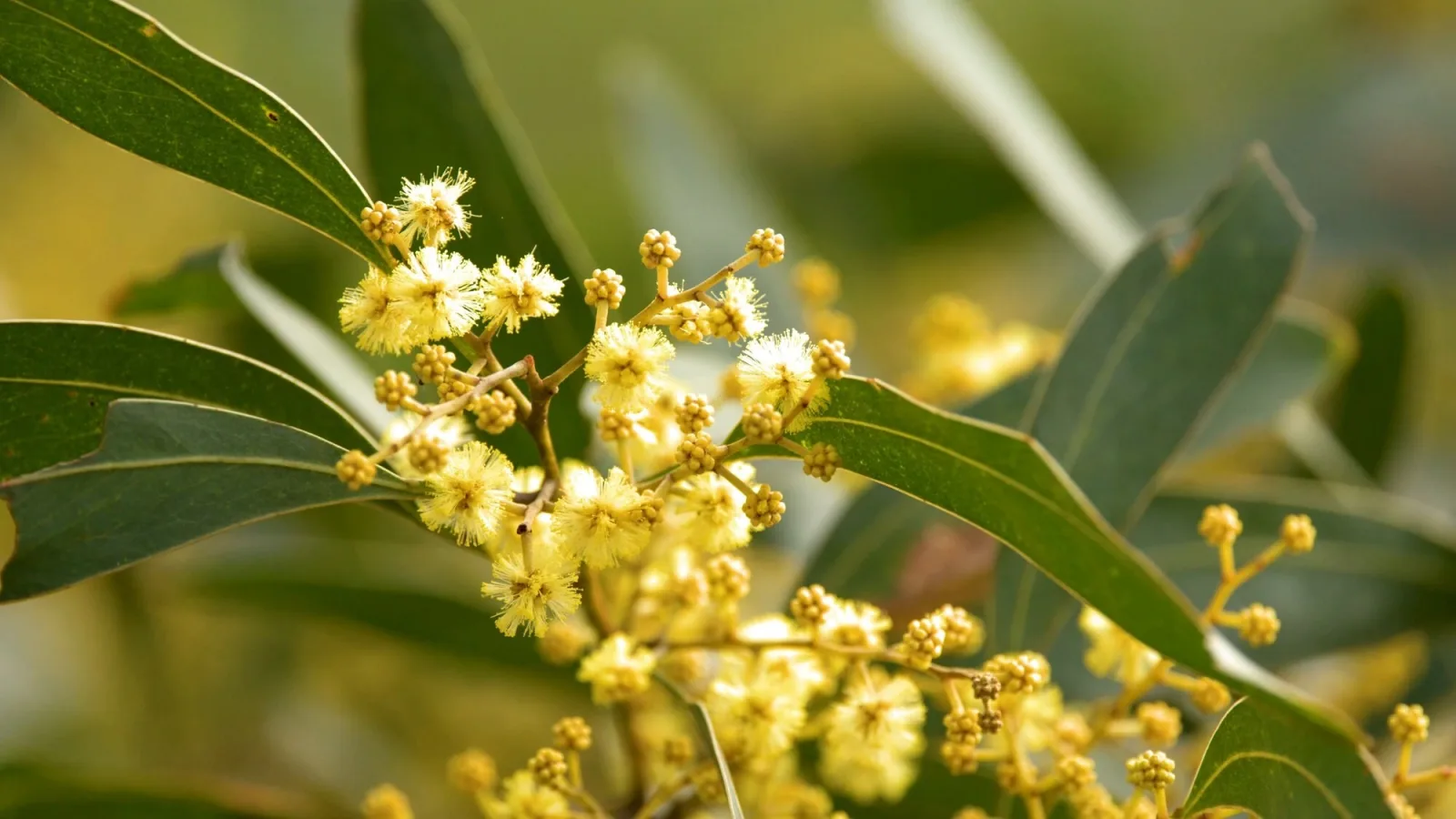
1 September is also National Wattle Day. Golden wattle (Acacia pycnantha) flowers in spring with fluffy, sweetly scented golden-yellow heads, and it is Australia's national floral emblem.
The emblem is younger than many people think. According to the Australian National Botanic Gardens, golden wattle was only proclaimed the national floral emblem in 1988, the bicentenary year, and 1 September was formally declared National Wattle Day in 1992. Wattle has been around the shield of the Commonwealth coat of arms since 1912, and the national colours, green and gold, are said to come from its leaves and flowers.
Wattle Day is not a holiday.
Wattle as a national symbol
- 1912Coat of arms granted by Royal Warrant, with wattle branches around the shield.
- 1988Golden wattle proclaimed the national floral emblem in the bicentenary year.
- 19921 September formally declared National Wattle Day.
Swooping season
Spring is nesting time for the Australian magpie, and some birds defend their territory by swooping at walkers and cyclists. In Western Australia, the Department of Biodiversity, Conservation and Attractions places swooping between August and December, mostly by males protecting eggs and chicks.
The advice is simple: wear a wide-brimmed hat and sunglasses, avoid known hotspots or take another route while the chicks are in the nest, and never throw sticks or stones at the birds.
Spring in the Top End
In the far north, September is not a mild month. Kakadu's Traditional Owners recognise six seasons, and early spring falls in Kurrung, from mid-August to mid-October: hot and dry, with temperatures from 23 to 37 degrees. It is still goose time and the time to hunt file snakes and long-necked turtles, while sea turtles lay their eggs on Field Island and West Alligator Head.
As thunderclouds start to build, white-breasted wood swallows arrive. From mid-October the country moves into Kunumeleng, the pre-monsoon season, hot and increasingly humid.
Public holidays in spring
There is no national public holiday between September and November, but several states have one. Labour Day and the King's Birthday move around the calendar depending on where you live, and Victoria has two spring holidays tied to sport: the Friday before the AFL Grand Final and Melbourne Cup Day.
Spring public holidays in 2026
| Date | Holiday | Where |
|---|---|---|
| Friday 25 September | Friday before the AFL Grand Final | Victoria |
| Monday 28 September | King's Birthday | Western Australia |
| Monday 5 October | Labour Day | ACT, NSW, South Australia |
| Monday 5 October | King's Birthday | Queensland |
| Tuesday 3 November | Melbourne Cup Day | Victoria |
Dates for 2026. Check your state's list for the coming year before booking leave.
Sources: Reserve Bank of Australia
Frequently asked questions
What is the first day of spring in Australia?
1 September. Australia uses meteorological seasons, so spring covers September, October and November.
Is the first day of spring a public holiday?
No. It is a calendar convention. 1 September is also National Wattle Day, which is not a holiday either.
When is the spring equinox in Australia?
Around 22 or 23 September. In 2027 it falls on 23 September at 4:02 pm AEST, according to the US Naval Observatory.
When do the clocks go forward?
On the first Sunday in October, in NSW, Victoria, South Australia, Tasmania and the ACT. Queensland, WA and the NT do not change their clocks.
When is magpie swooping season?
During spring nesting. In WA the state environment department places it between August and December.
When does spring end?
On 30 November. Summer starts on 1 December.
Related dates
- WinterTuesday, June 1, 2027
- SummerTuesday, December 1, 2026
- King's BirthdayMonday, June 14, 2027