Curiosities
When Does Autumn Start in Australia? 1 March, the Equinox and the End of Daylight Saving
Australia counts autumn from 1 March to 31 May. Here is why the season starts three weeks before the equinox, when the clocks go back, and why Easter and Anzac Day always land in autumn.
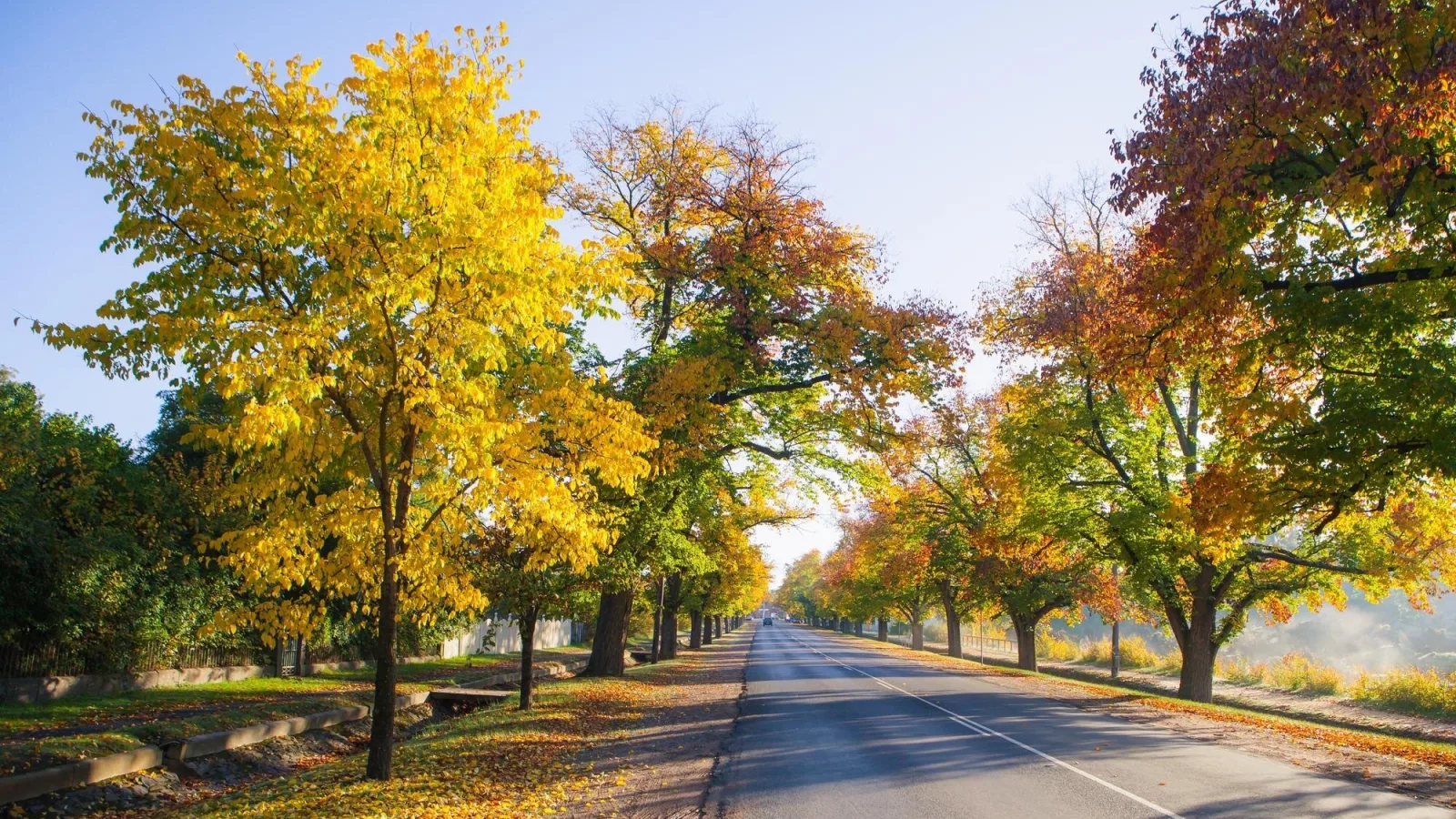
When does autumn start in Australia?
Autumn in Australia starts on Monday, March 1, 2027 and runs to 31 May. It is not a public holiday: banks, shops, schools and offices keep their normal hours on the first day of the season, which is 99 days away.
The date is a convention, not an astronomical event. Australia groups whole calendar months into seasons, so autumn is March, April and May. Winter follows on Tuesday, June 1, 2027.
Why 1 March and not the equinox?
In much of the Northern Hemisphere, a season begins at a solstice or an equinox. That is the astronomical definition. Australia follows the meteorological one, with three full calendar months per season.
The reason is practical. Seasons built from whole months make it easier to compile and compare climate statistics year after year. Summer gets the three hottest months, winter the three coldest, and autumn takes the transition in between.
The equinox still happens, just later. Geoscience Australia defines it as the moment the Sun crosses the plane of the Earth's equator, when day and night are about the same length.
The March equinox of 2027 in Australian time
| Time zone | Where | Local time |
|---|---|---|
| AEDT (UTC+11) | Sydney, Melbourne, Canberra, Hobart | Sunday 21 March 2027, 7:25 am |
| ACDT (UTC+10:30) | Adelaide | Sunday 21 March 2027, 6:55 am |
| AEST (UTC+10) | Brisbane | Sunday 21 March 2027, 6:25 am |
| ACST (UTC+9:30) | Darwin | Sunday 21 March 2027, 5:55 am |
| AWST (UTC+8) | Perth | Sunday 21 March 2027, 4:25 am |
Converted from 20 March 2027, 20:25 UT. Daylight saving is still running in the south-east at the time of the equinox, which is why Sydney is an hour ahead of Brisbane.
Sources: US Naval Observatory
The clocks go back in April
Autumn is the season when daylight saving ends. In New South Wales, Victoria, South Australia, Tasmania and the ACT, clocks go back one hour at 3am daylight time on the first Sunday in April, landing at 2am standard time. In 2026 that was Sunday 5 April; in 2027 it is Sunday 4 April, according to the NSW Government.
You gain an hour of sleep and get lighter mornings, but evenings darken sooner. Queensland, Western Australia and the Northern Territory do not use daylight saving, so for them nothing changes. What does change is the gap: from early April, Sydney and Brisbane share the same time again, and the difference between Sydney and Perth drops from three hours to two.
What the Bureau's autumn outlook tells you
Ahead of autumn, the Bureau of Meteorology issues a long-range forecast, often called the climate outlook. It covers March to May and is written as chances, not promises: the likelihood that rainfall and temperatures will be above or below average for each part of the country, measured against a recent historical average.
It is a guide to the general lean of a whole season. It cannot tell you whether it will rain on a particular weekend, so check the Bureau's latest outlook and the regular forecast closer to your plans.
Autumn in the Top End
In the tropical north, the Bureau of Meteorology works with two seasons instead of four: a wet season from October to April and a dry season from May to September. So the months the south calls autumn are, up north, the end of the wet and the start of the dry.
In Kakadu National Park, the Traditional Owners recognise six seasons, and autumn crosses three of them. Kudjewk, the monsoon season, runs to March. Bangkerreng, in April, is the knock 'em down storm season: windy storms flatten the speargrass, the rain clouds clear and the floodwaters recede. Yekke, from May to mid-June, is cooler and less humid, with mist over the plains and the time when patch burning begins.
Easter and Anzac Day always fall in autumn
Western Easter is the first Sunday after the full Moon on or after the equinox, which the calculation fixes at 21 March. That puts Easter Sunday somewhere between 22 March and 25 April, every single year. As the Macquarie Dictionary points out, in Australia the spring equinox used to set Easter actually falls in autumn.
The next Easter long weekend starts with Good Friday on Friday, March 26, 2027, and Easter Sunday is Sunday, March 28, 2027. When Easter comes early, it can arrive before the clocks go back, giving the long weekend lighter evenings. Read more in our guides to Easter and Good Friday.
Anzac Day is always 25 April, a public holiday in every state and territory. The next one is Sunday, April 25, 2027. Because the latest possible Easter Sunday is 25 April, the two can occasionally fall close together or on the same weekend.
The season also holds state holidays. In the Reserve Bank's 2026 list, March had Labour Day in Western Australia and Victoria, Canberra Day in the ACT and Adelaide Cup Day in South Australia, and May had Labour Day in Queensland and May Day in the Northern Territory.
First day of autumn in the coming years
| Year | Date |
|---|---|
| 2027 | Monday, March 1, 2027 |
| 2028 | Wednesday, March 1, 2028 |
| 2029 | Thursday, March 1, 2029 |
| 2030 | Friday, March 1, 2030 |
| 2031 | Saturday, March 1, 2031 |
Frequently asked questions
What is the first day of autumn in Australia?
1 March. Australia uses meteorological seasons, so autumn covers March, April and May. The next one is Monday, March 1, 2027.
Is the first day of autumn a public holiday?
No. It is a calendar convention. The public holidays in autumn are Good Friday, Easter Monday and Anzac Day nationally, plus state days such as Labour Day, Canberra Day and May Day.
When is the autumn equinox in Australia?
In late March. In 2027 it falls on Sunday 21 March at 7:25 am AEDT, or 6:25 am AEST in Brisbane.
When does daylight saving end?
At 3am on the first Sunday in April in NSW, Victoria, SA, Tasmania and the ACT. In 2027 that is Sunday 4 April. Queensland, WA and the NT do not change their clocks.
Is Easter always in autumn in Australia?
Yes. Western Easter Sunday always falls between 22 March and 25 April, which is inside autumn.
When does autumn end?
On 31 May. Winter starts on 1 June.
Related dates
- Easter SundaySunday, March 28, 2027
- Anzac DaySunday, April 25, 2027
- WinterTuesday, June 1, 2027