Astronomy
Winter Solstice in Canada: When Winter Starts and How Much Daylight You Get
Astronomical winter begins with the solstice, the shortest day of the year. It is not a statutory holiday, and daylight ranges from about nine hours in southern Ontario to barely four in Iqaluit.
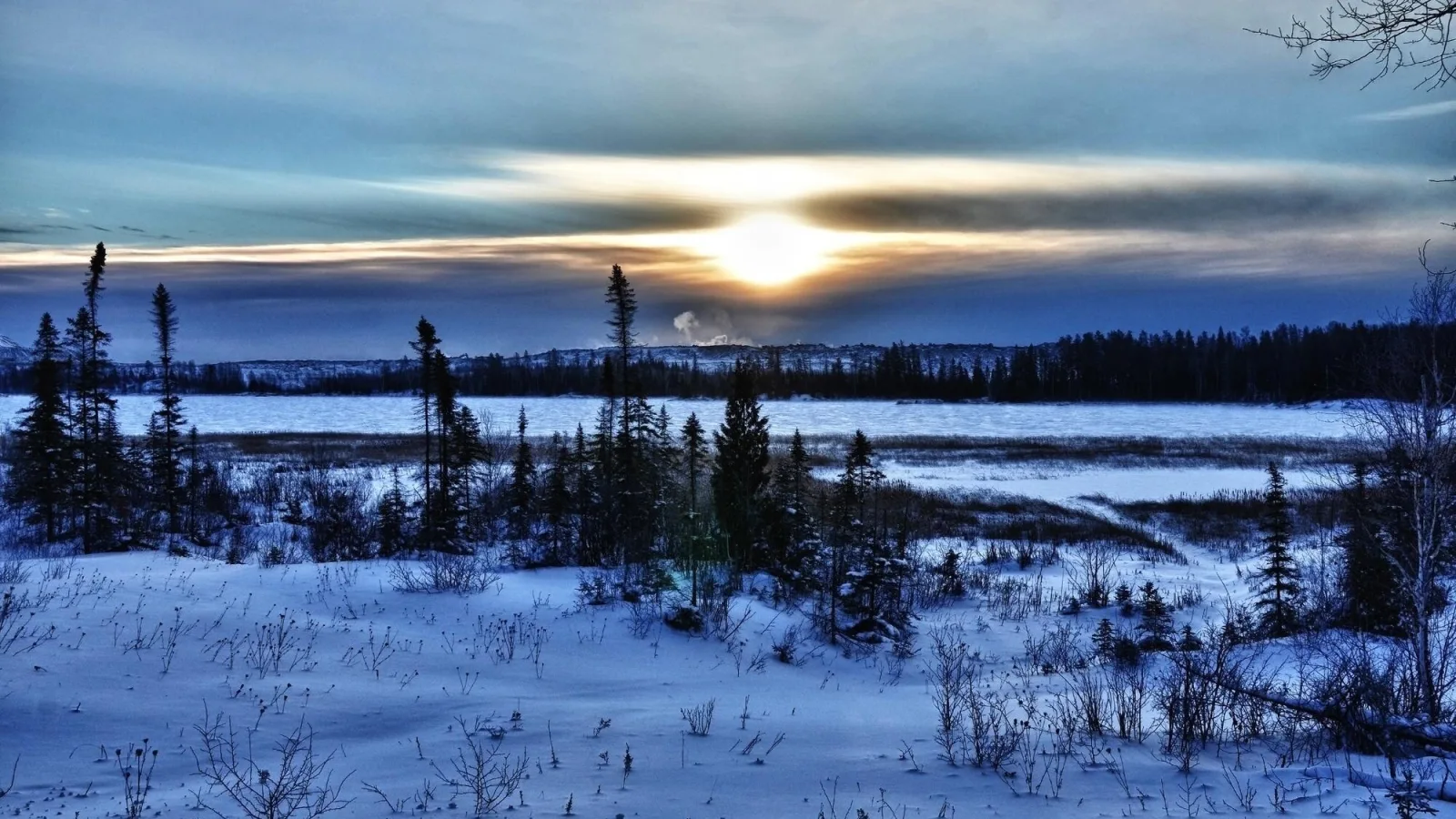
In Canada, winter officially begins with the winter solstice on Monday, December 21, 2026. That is the start of astronomical winter, and it is the shortest day of the year from coast to coast to coast.
The solstice is not a statutory holiday. Schools, banks, stores and offices keep their normal hours, and the next days off are Christmas Day and Boxing Day.
What happens at the winter solstice
Earth's axis is tilted. In late December the Northern Hemisphere leans farthest away from the sun, so the sun climbs to its lowest noon height of the year and stays above the horizon for the shortest time.
The solstice is an instant, not a whole day. It happens at the same moment everywhere in Canada; only the clock time changes, from Newfoundland Time to Pacific Time. The U.S. Naval Observatory publishes the exact moment each year in Universal Time.
Distance from the sun has nothing to do with it. Earth is actually closest to the sun in early January, at perihelion, in the middle of the Canadian winter.
How much daylight you get across Canada
Latitude makes a huge difference. On solstice day, The Weather Network calculates about 8 hours 56 minutes of daylight in Toronto and roughly 9 hours 7 minutes in Kingsville, on Lake Erie, the most anywhere in the country.
Farther north the day shrinks fast. Iqaluit, the capital of Nunavut, gets only about 4 hours 20 minutes of sun.
The good news comes right after. From the solstice on, each day is a little longer than the one before, all the way to the summer solstice in June.
Daylight on the winter solstice
| Place | Approximate daylight |
|---|---|
| Kingsville, Ont. | 9 h 7 min |
| Toronto, Ont. | 8 h 56 min |
| Iqaluit, Nunavut | 4 h 20 min |
Figures vary by about a minute from year to year.
Sources: The Weather Network
Astronomical winter or meteorological winter?
Weather forecasters use a different calendar. Meteorological winter runs from December 1 to the end of February, three full months that line up with the way temperature and snowfall records are kept.
So when a forecaster talks about "this winter", they usually mean December, January and February. The solstice marks the astronomical start, about three weeks later.
How the solstice is marked in Canada
For many First Nations, Métis and Inuit communities, the solstice is a time to gather, share stories and pass on knowledge. Statistics Canada links the season to harvesting, sewing, carving and other traditional practices, and reports that 70% of off-reserve Indigenous children aged 1 to 5 took part in at least one cultural or harvesting activity in the past year.
For everyone else, the solstice is a turning point on the calendar: the darkest stretch is over, even though the cold is not.
The big public winter celebrations come later. Winterlude, created in 1979, fills Ottawa-Gatineau with skating, tube sliding and ice sculptures every February. The Québec Winter Carnival takes over Québec City the same month, with night parades and its famous ice canoe race.
Frequently asked questions
When is the first day of winter in Canada?
Astronomical winter begins with the winter solstice on Monday, December 21, 2026. Meteorological winter begins on December 1.
Is the winter solstice a holiday in Canada?
No. It is not a federal general holiday under the Canada Labour Code, and the federal list of public holidays shows only Christmas Day and Boxing Day in December.
Is the solstice always on December 21?
In Canadian time zones it falls on or around December 21. The exact moment shifts slightly from year to year, and the countdown on this site always shows the correct date.
Where in Canada is the shortest day?
The farther north you go, the shorter it gets. Iqaluit, Nunavut, has about 4 hours 20 minutes of daylight on the solstice, less than half of what Toronto gets.
Do the days get longer right away?
Yes. Daylight starts to grow the day after the solstice, slowly at first, then faster through January and February.
Upcoming dates: Winter
Related dates
- Christmas DayFriday, December 25, 2026
- New Year's DayFriday, January 1, 2027
- SummerMonday, June 21, 2027